Context
SubHub is the internal tool NYT customer care agents use to view and manage subscriber accounts. It was structured to mirror the customer-facing Account experience: separate areas for subscriptions, billing, history, and more.
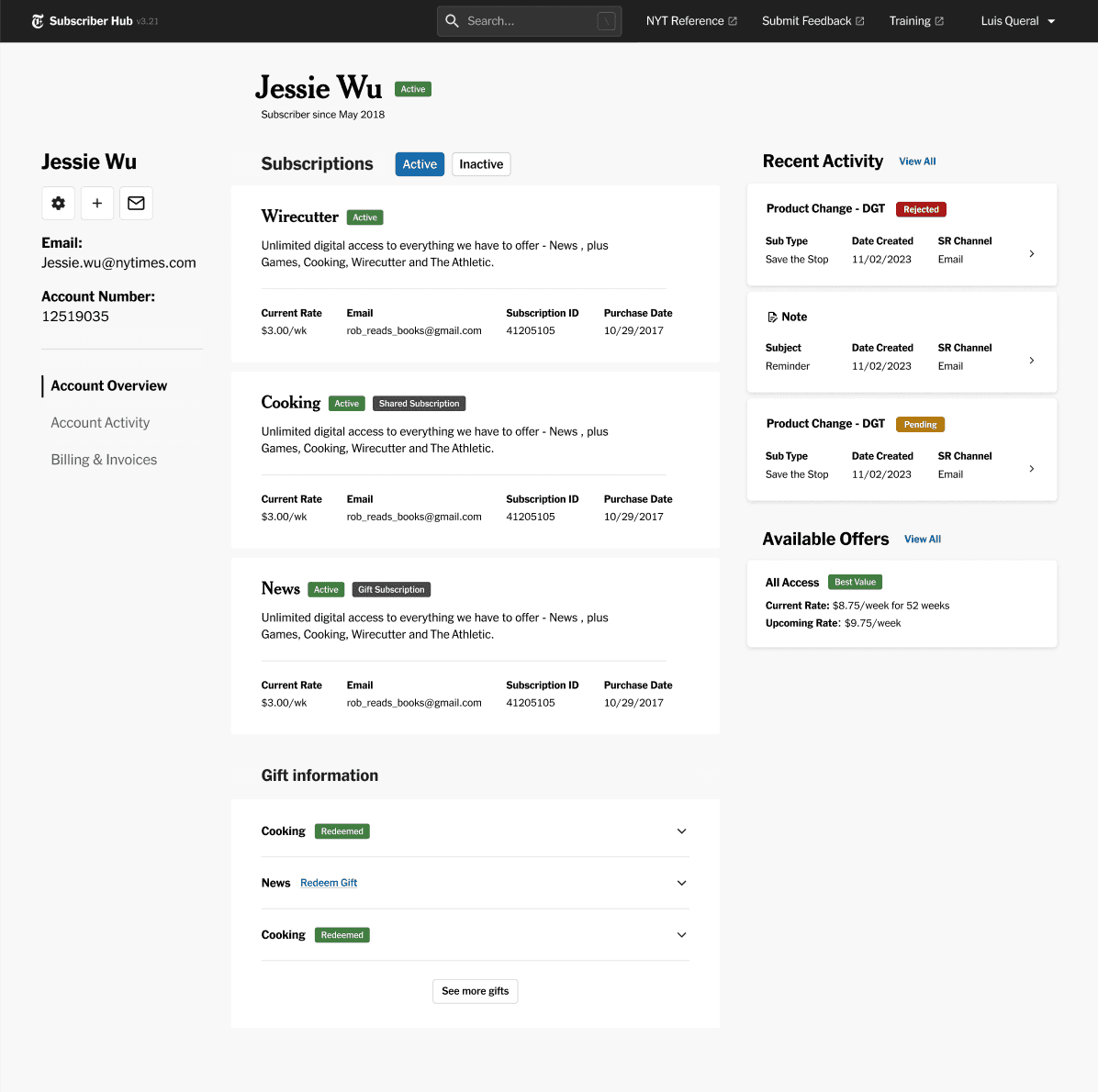
The New York Times · Customer Care · Subscriber Hub
Streamline navigation, improve discoverability, and build a more intuitive structure where information is logically grouped and easily searchable, so agents work more efficiently and resolve inquiries faster.
SubHub is the internal tool NYT customer care agents use to view and manage subscriber accounts. It was structured to mirror the customer-facing Account experience: separate areas for subscriptions, billing, history, and more.
That nested hierarchy made it difficult for agents to find what they needed quickly, contributing to longer handle times and a frustrating experience for both agents and customers.
Re-architect navigation, organization, search, and labeling in one coherent push, validated with agents and tree testing, so SubHub scales as workflows and product surfaces grow.
Four phases, from open-ended discovery, to validated concepts, to a shipped re-architecture.
User research; mapping agent painpoints.
User personas; generating hypotheses.
Creating design concepts; validating concepts with agents.
Aligning with cross-functional partners; VQA with engineering.
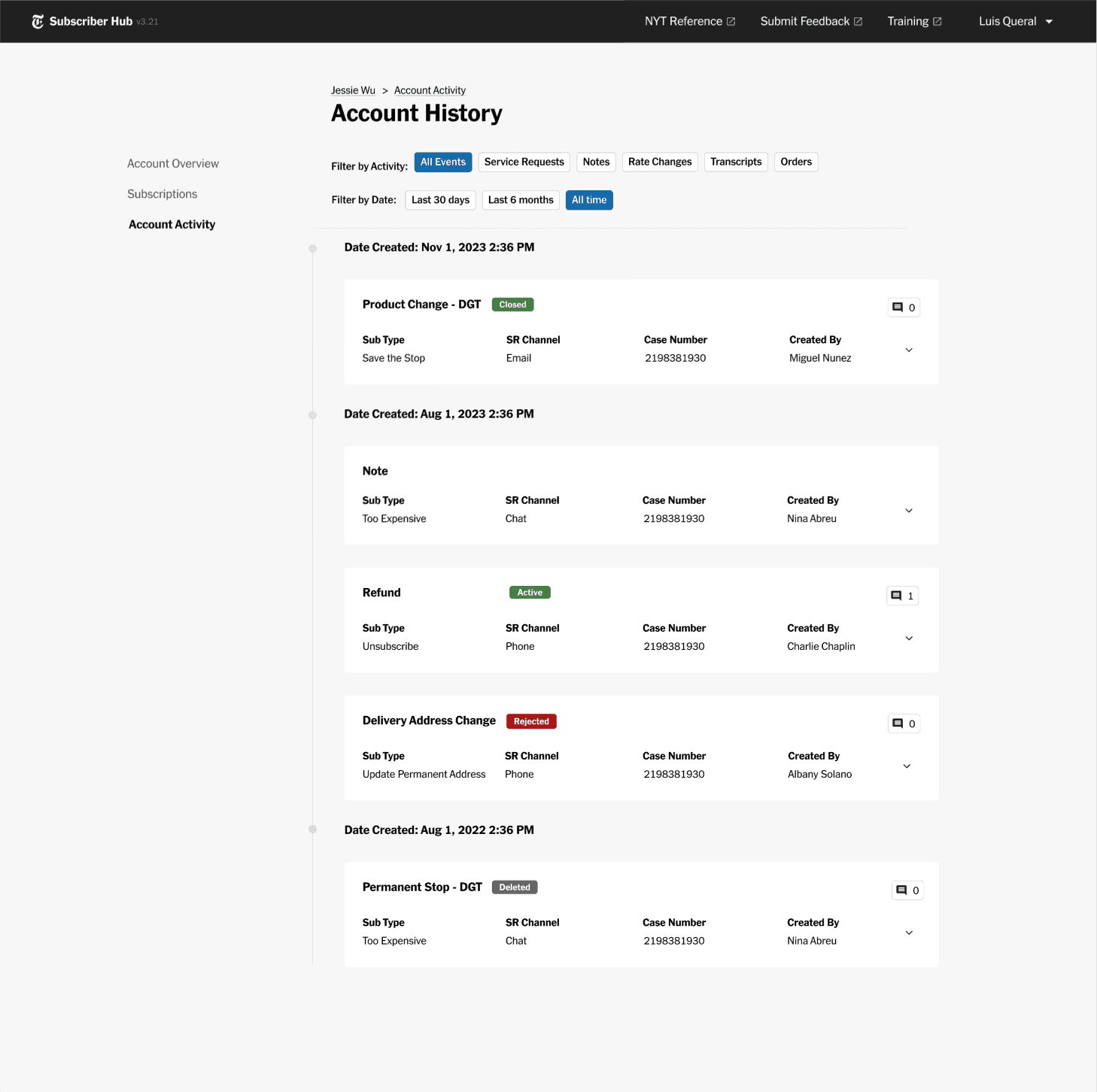
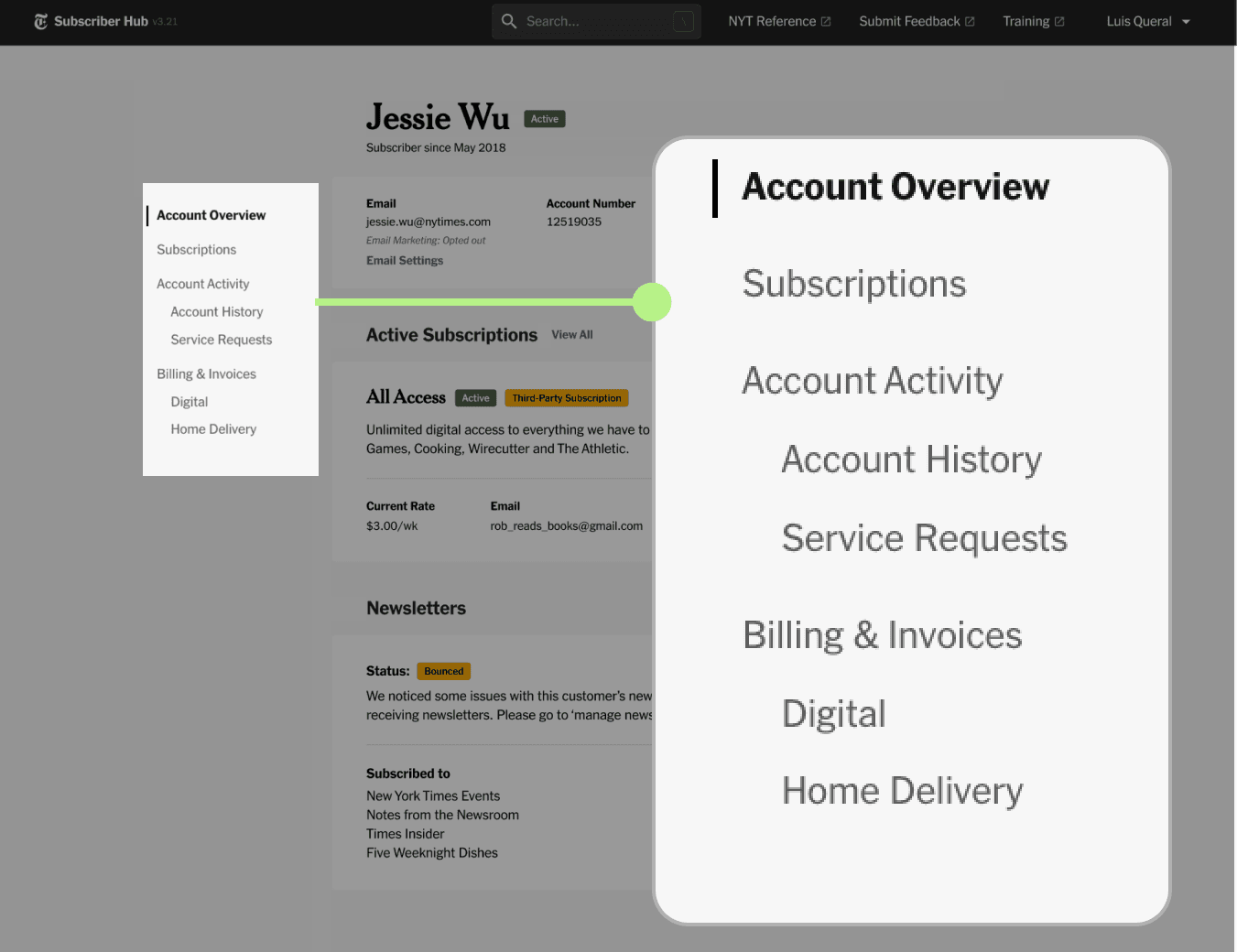
SubHub was designed to mirror the customer-facing Account experience, a nested hierarchy where subscriptions, account overview, billing, and history each lived on separate pages.
That structure works well for customers, who visit infrequently and one page at a time. It breaks down for power users like agents, who need to access multiple data points quickly. As a result, agents had to navigate across multiple sections, making their workflow fragmented and time-consuming.
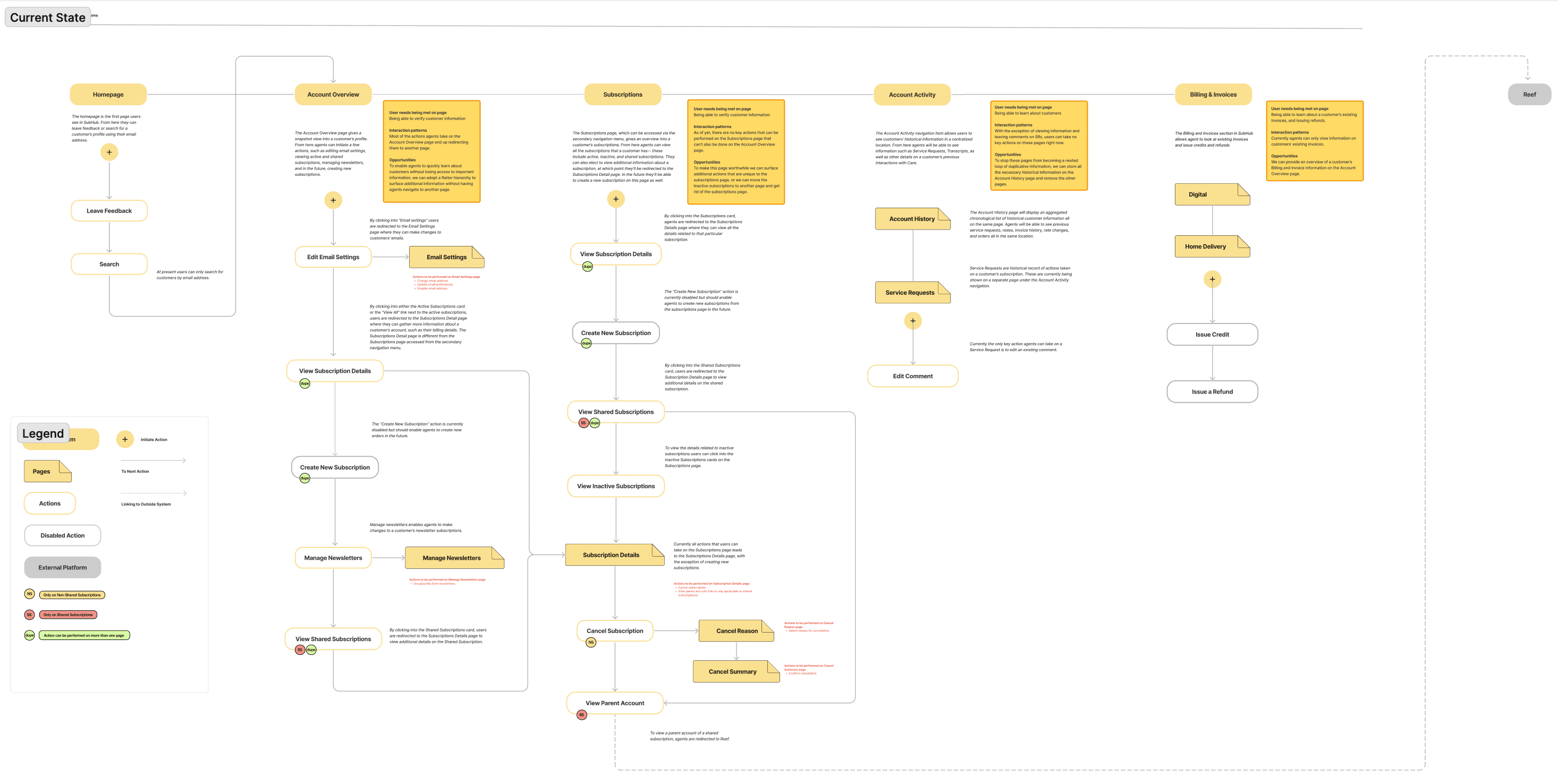
To better understand the problem, I reviewed existing research on agent behaviors related to navigation and search, focusing on their mental models and expectations. I analyzed observation studies that revealed how agents move between platforms, gather customer information, and locate necessary data. Using these insights, I created user personas to map out the primary pain points affecting our key users.
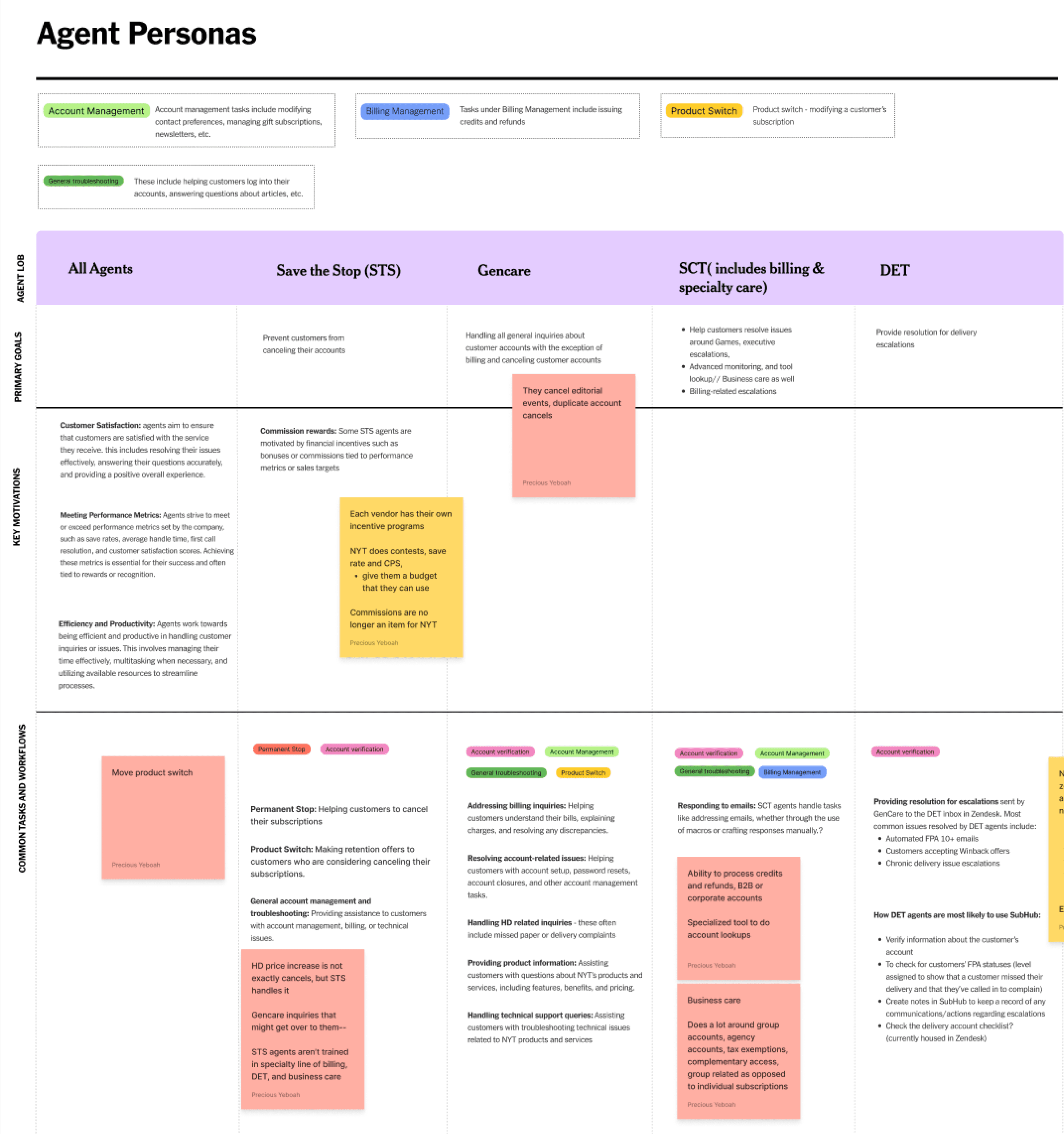
Three issues surfaced across nearly every research artifact.
Customer data was scattered across different pages or systems, making it difficult for agents to obtain a comprehensive view of a customer's history and interactions.
 1
1
Every new feature was filed under Profile rather than placed where the workflow expected it, turning the section into a catch-all for unrelated capabilities.
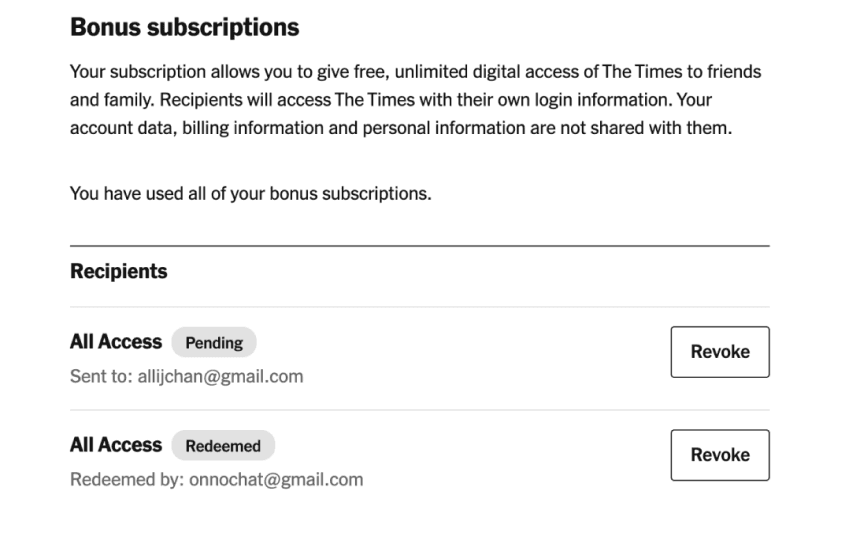
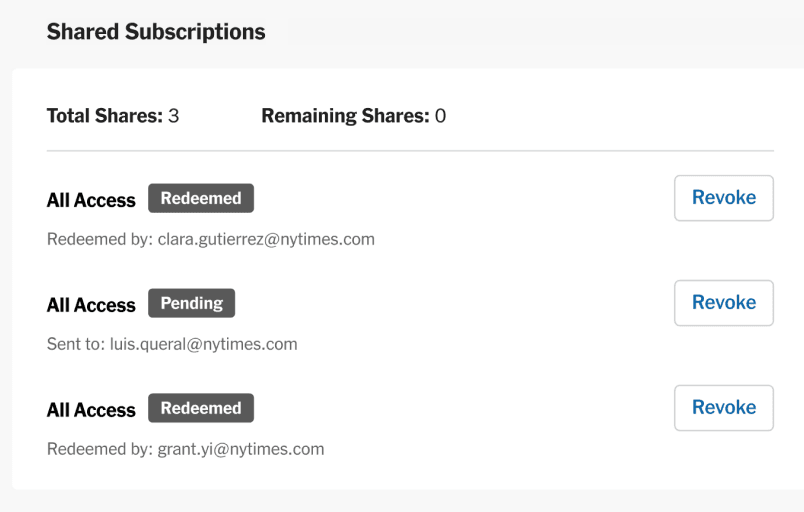
Customer details that belonged together were split across three to four subpages, forcing agents to memorize where each fact lived.
Agents lost orientation on every navigation, there was no single view that held the whole customer at once, so context had to be rebuilt manually.
Agents reported that search rarely yielded accurate or relevant results, slowing the process of locating customer accounts.

The language used in customer-facing platforms differed from the terminology in agent platforms, creating inconsistencies that lead to confusion and inefficiency.
I'm always five tabs deep before I can answer a basic question. The platform fights me on every call.Customer Care Agent, Observation study, Discovery phase
Based on insights from research, I developed a set of hypotheses focused on the four key IA dimensions, and predicted how improvements in each could improve agent workflows.
Navigation
Agents will benefit from a flatter navigational hierarchy because it provides quick and direct access to information and features without weeding through multiple pages to find what they need.
Organization
Adopting a centralized organization style will ensure easy access to customer data, subscription details, past interactions, and any other pertinent information necessary for processing requests.
Search
A mix between an integrated and customer-focused search will enable agents to search across a few important resources, while allowing them to narrow in on key customer attributes to generate the most useful results.
Labeling
Using terminology familiar to agents can translate to more comprehension, and increase agents' ability to assist customers more efficiently.
I facilitated a workshop with internal stakeholders, product manager, operations manager, design manager, and engineering lead, to pressure-test these hypotheses and assess their feasibility. We explored two questions: would these ideas work in practice? And could we redesign the platform to support agent workflows while aligning with business goals?
Overall, the team was receptive, but the biggest challenge was engineering feasibility. Suggestions for a more robust search and a centralized organization model would require fundamental changes to how information is structured and presented across multiple pages.
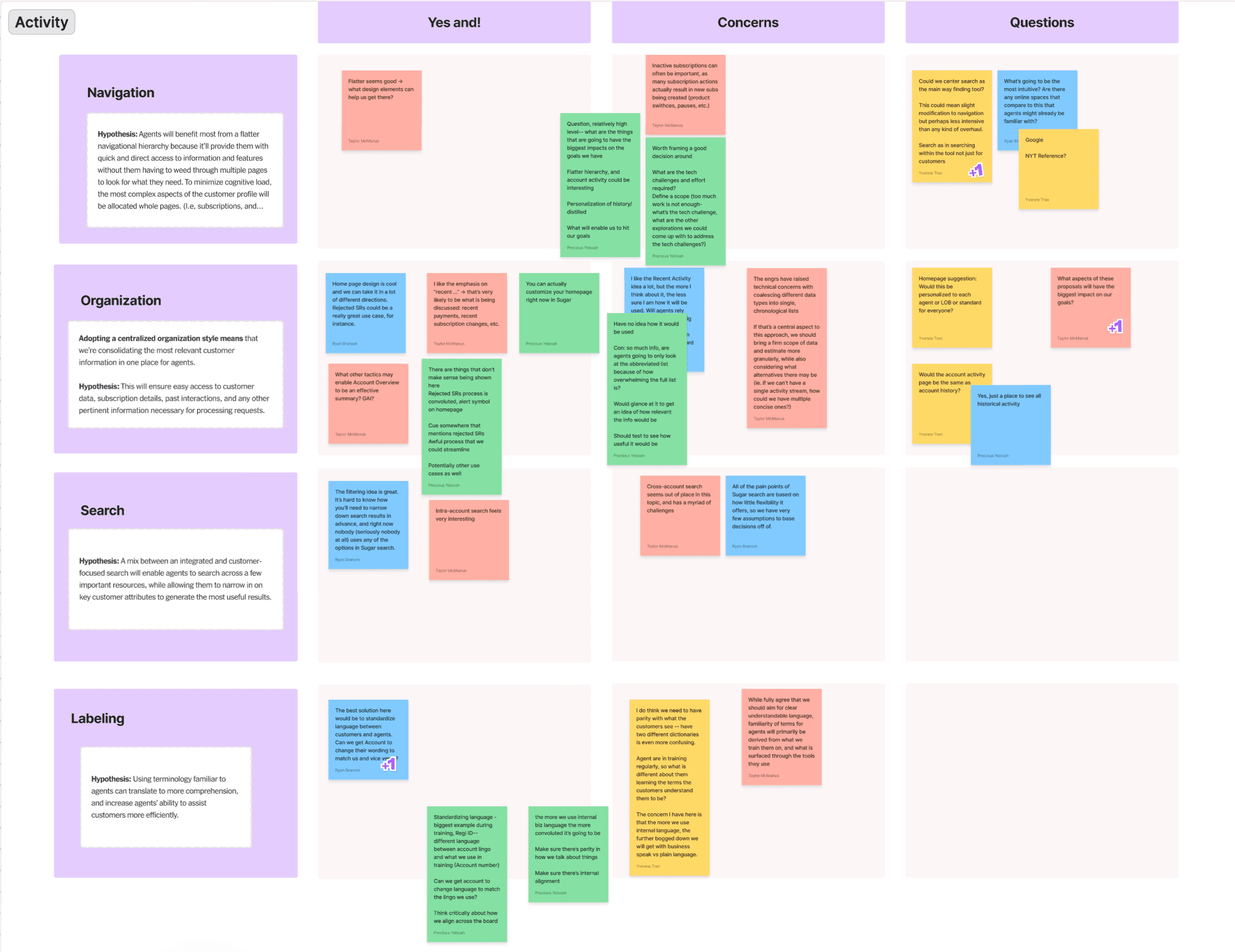
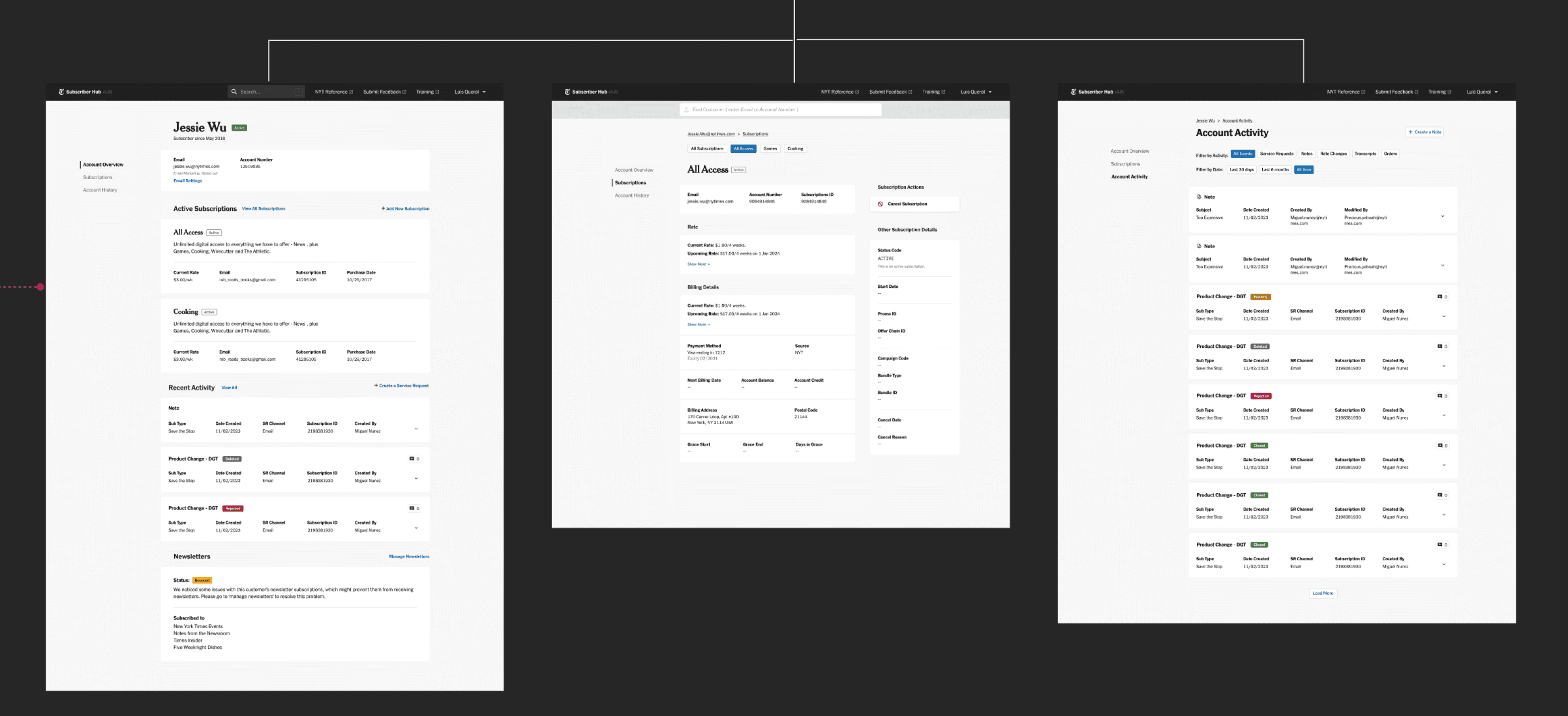
Building on insights from research and stakeholder feedback, I developed concepts that addressed each of the four IA dimensions.

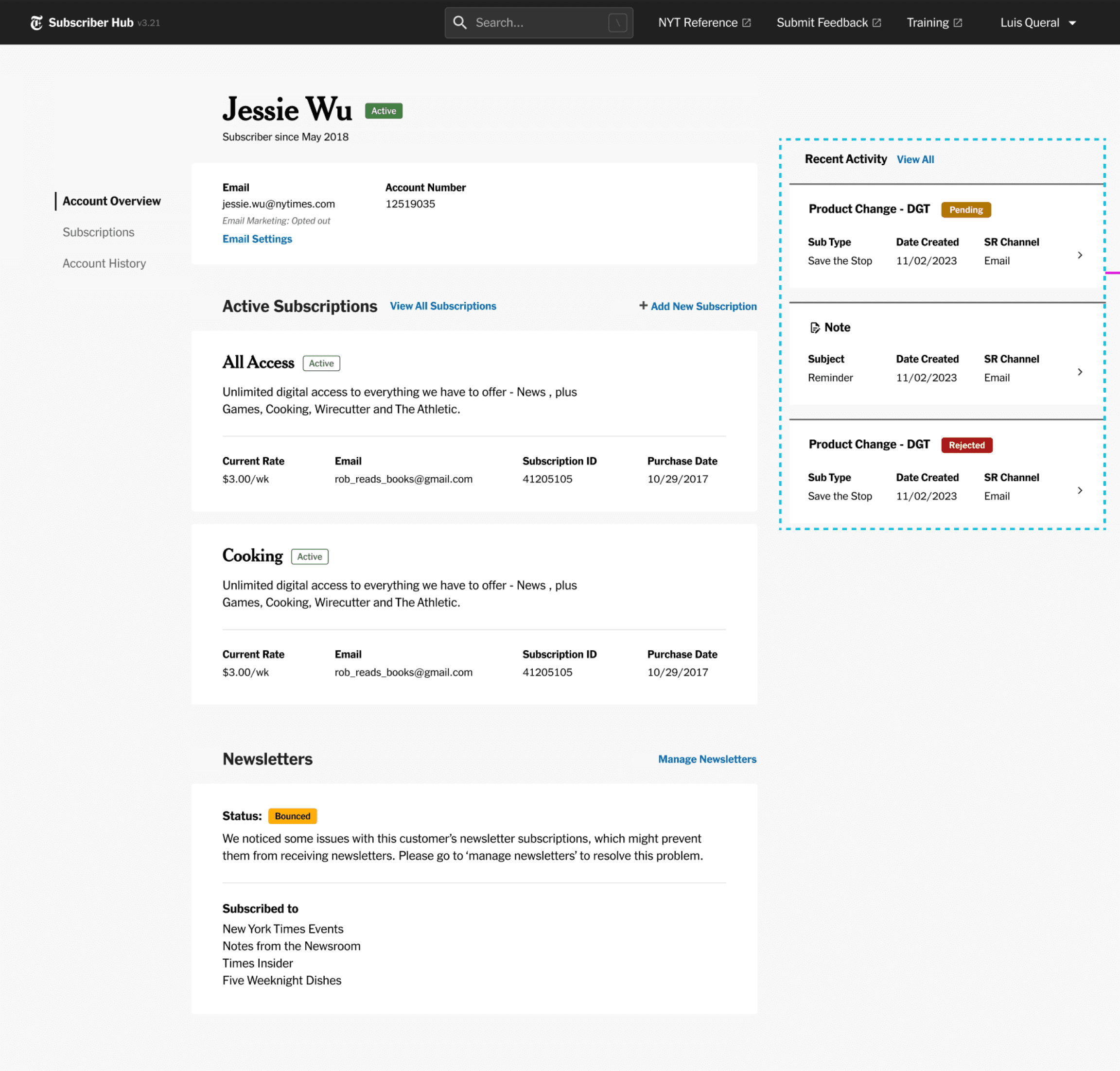
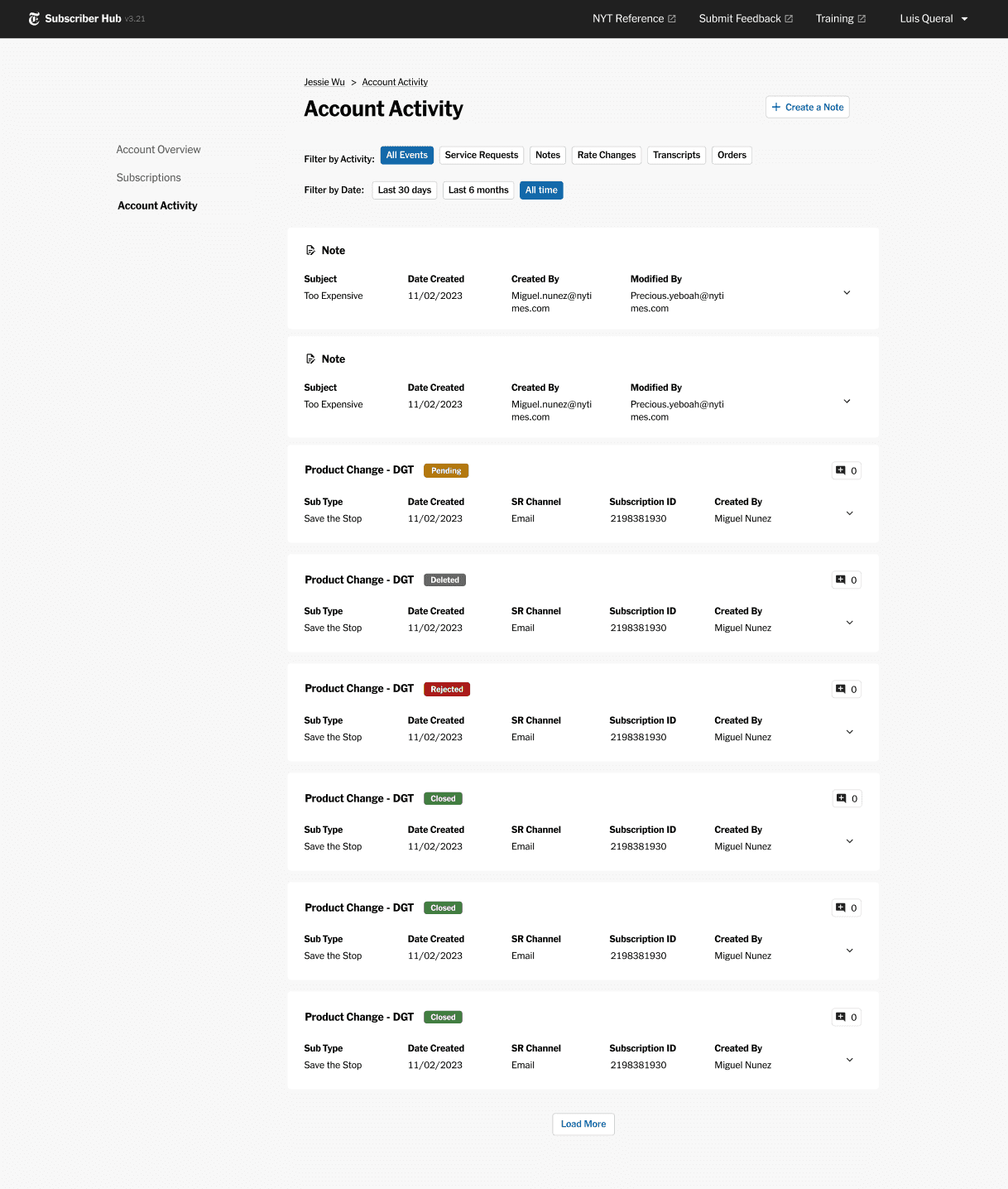
To simplify wayfinding and reduce cognitive load, I restructured SubHub by consolidating six existing pages into three core sections.
This reduction in pages aimed to make navigation more intuitive, minimizing unnecessary clicks and helping agents access key information more efficiently.
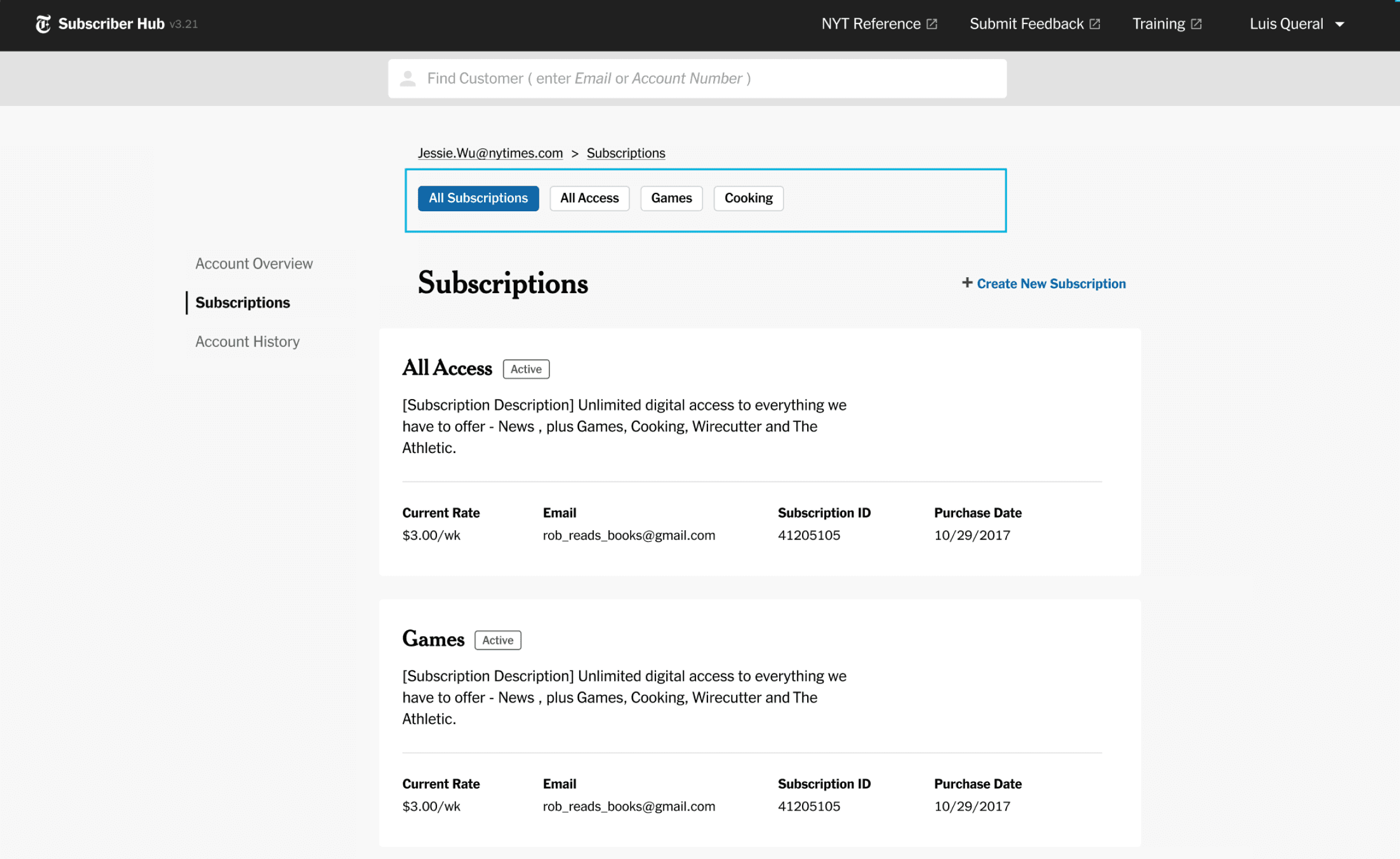
Grouping related information and adding lightweight filters so agents could navigate without losing customer context.
Concept 03

Letting agents look up customers using multiple attributes, beyond just email and account number.
Strengths
Tradeoffs
Concept 04
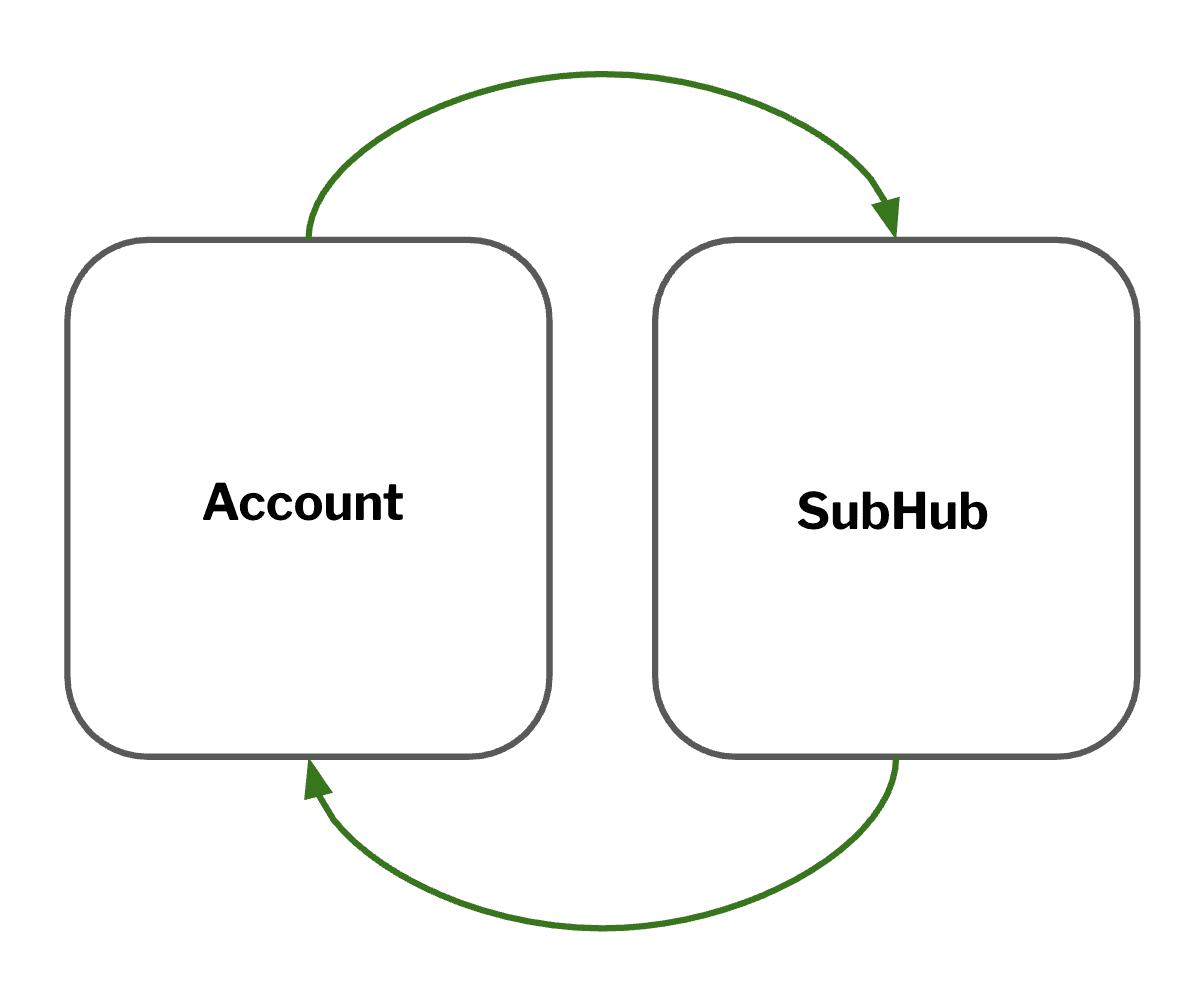
Aligning SubHub's terminology with the language agents use internally, and with what customers see, so the same word means the same thing on every screen.
Strengths
Tradeoffs
A focus group of five agents, four objectives, four hypotheses to test.
After developing these concepts, I tested them with agents through a focus group with five participants. The goal was to gather their feedback on how the designs could improve their workflows and identify any gaps.
Objectives
Assess whether the proposed navigation changes made it easier for agents to find key information.
Understand how a more centralized organization system impacted their ability to maintain customer context.
Evaluate whether expanded search capabilities helped agents locate accounts more efficiently.
Gather insights on label and terminology alignment to ensure clarity and ease of use.
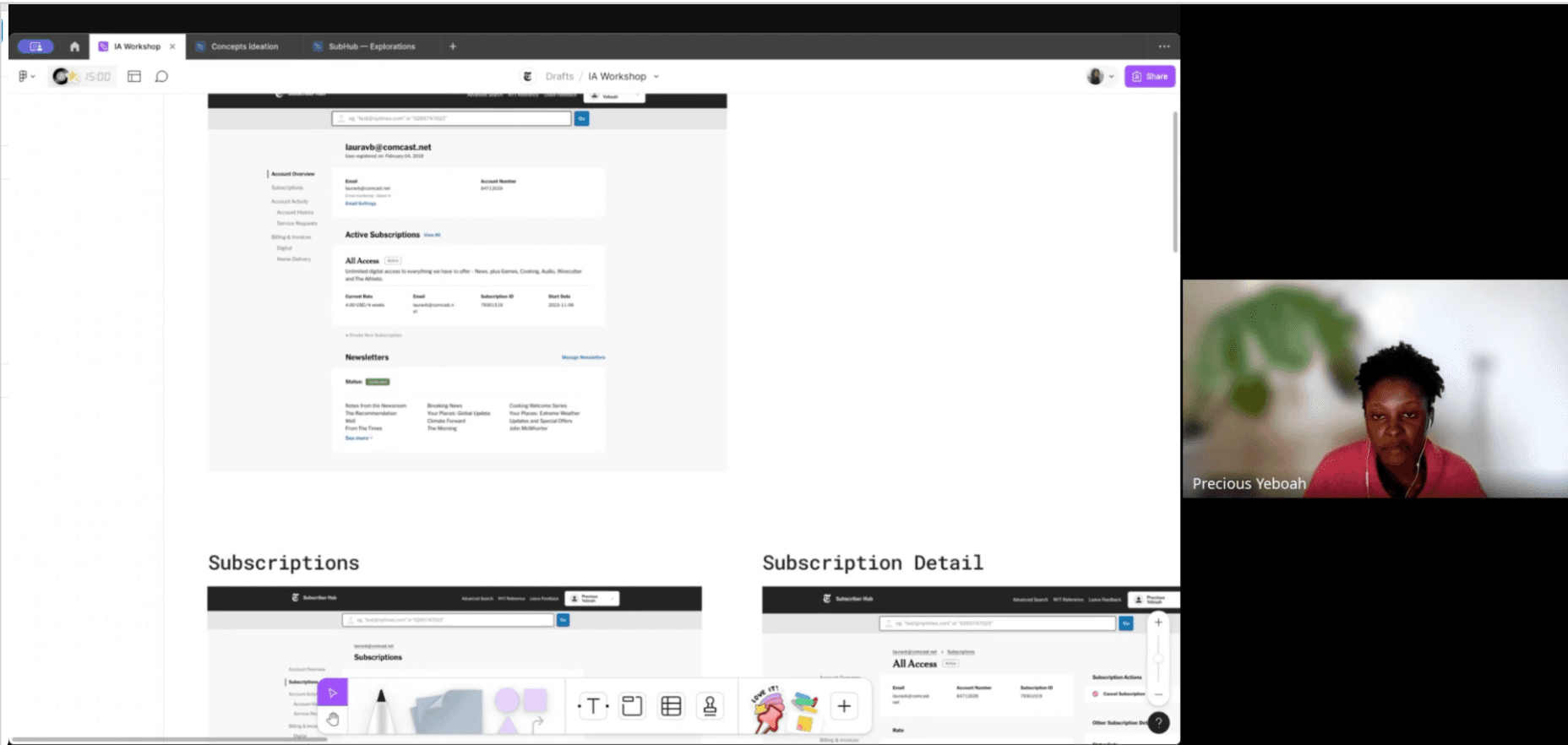
The focus group validated several hypotheses while uncovering preferences that shaped the final design.
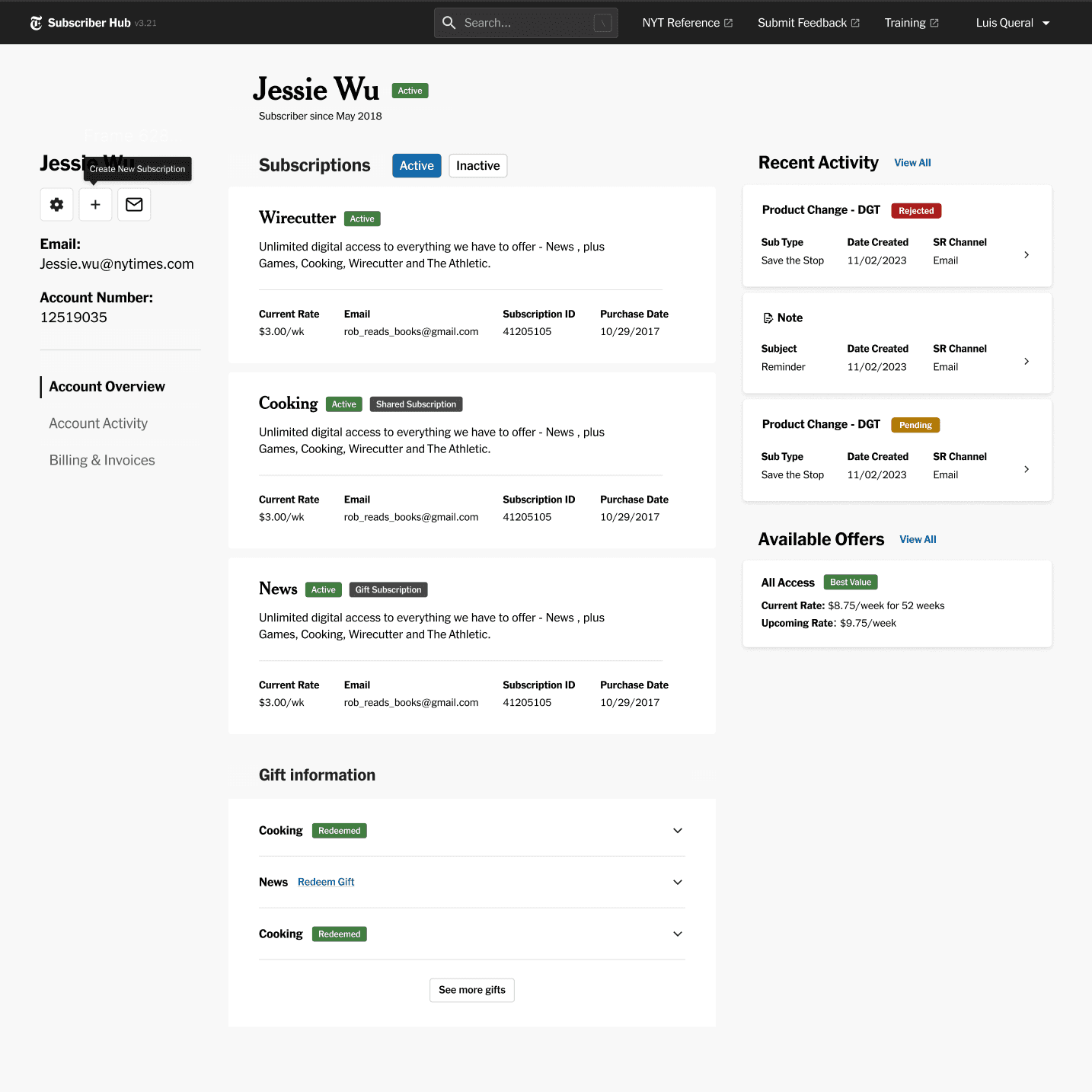
I restructured navigation by surfacing key actions, keeping customer details accessible, and consolidating redundant pages.
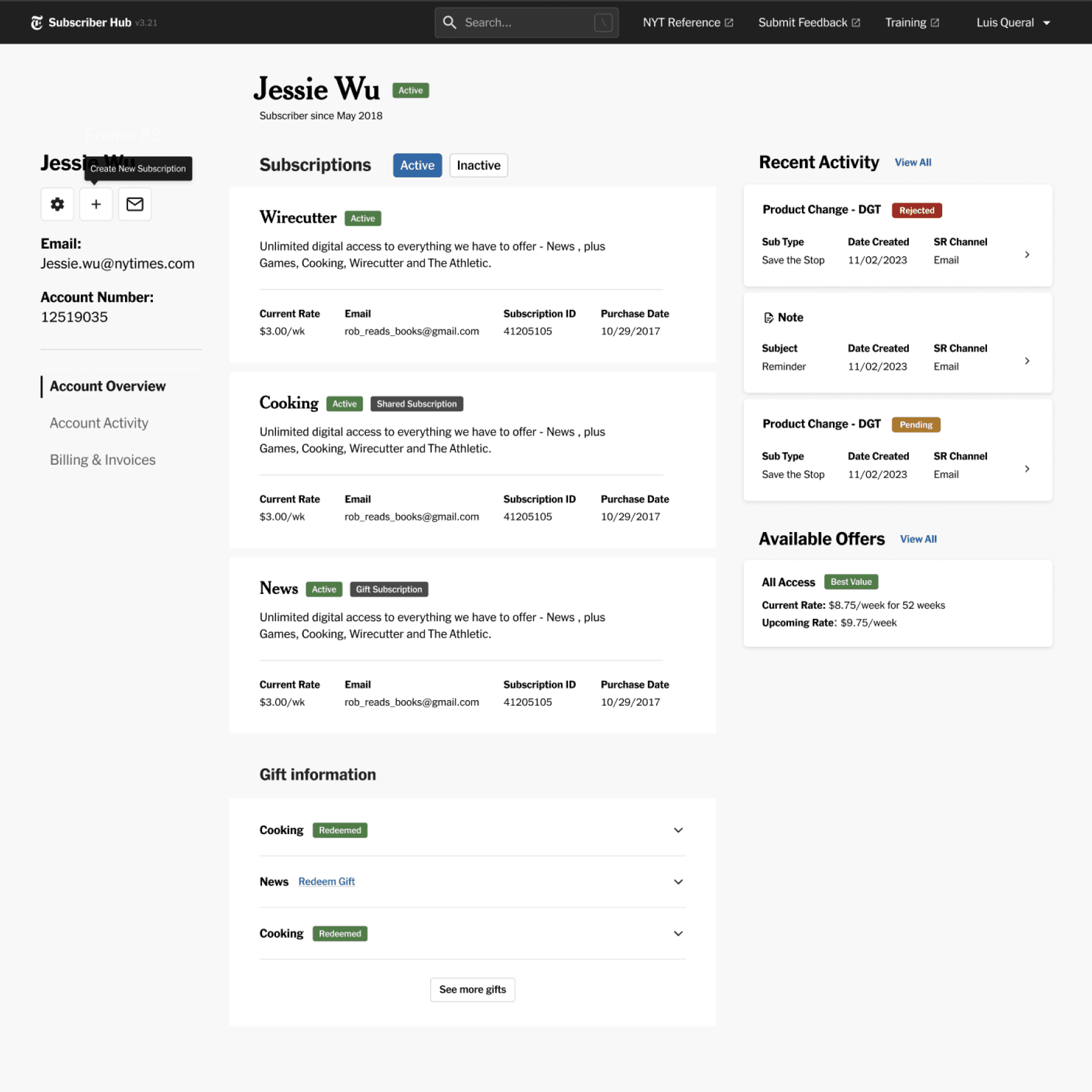
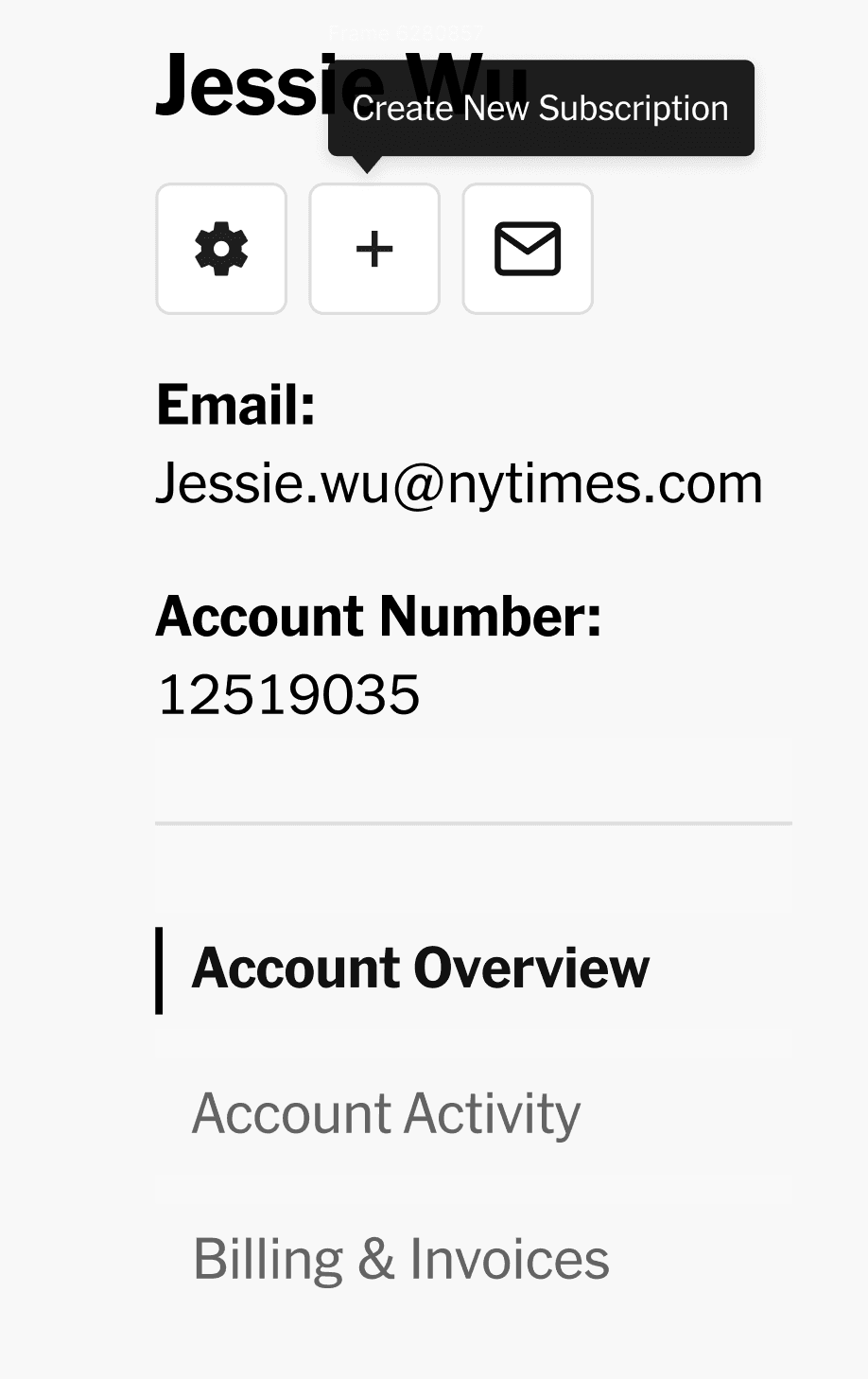
Related information grouped together, with filters that help agents navigate while keeping context.
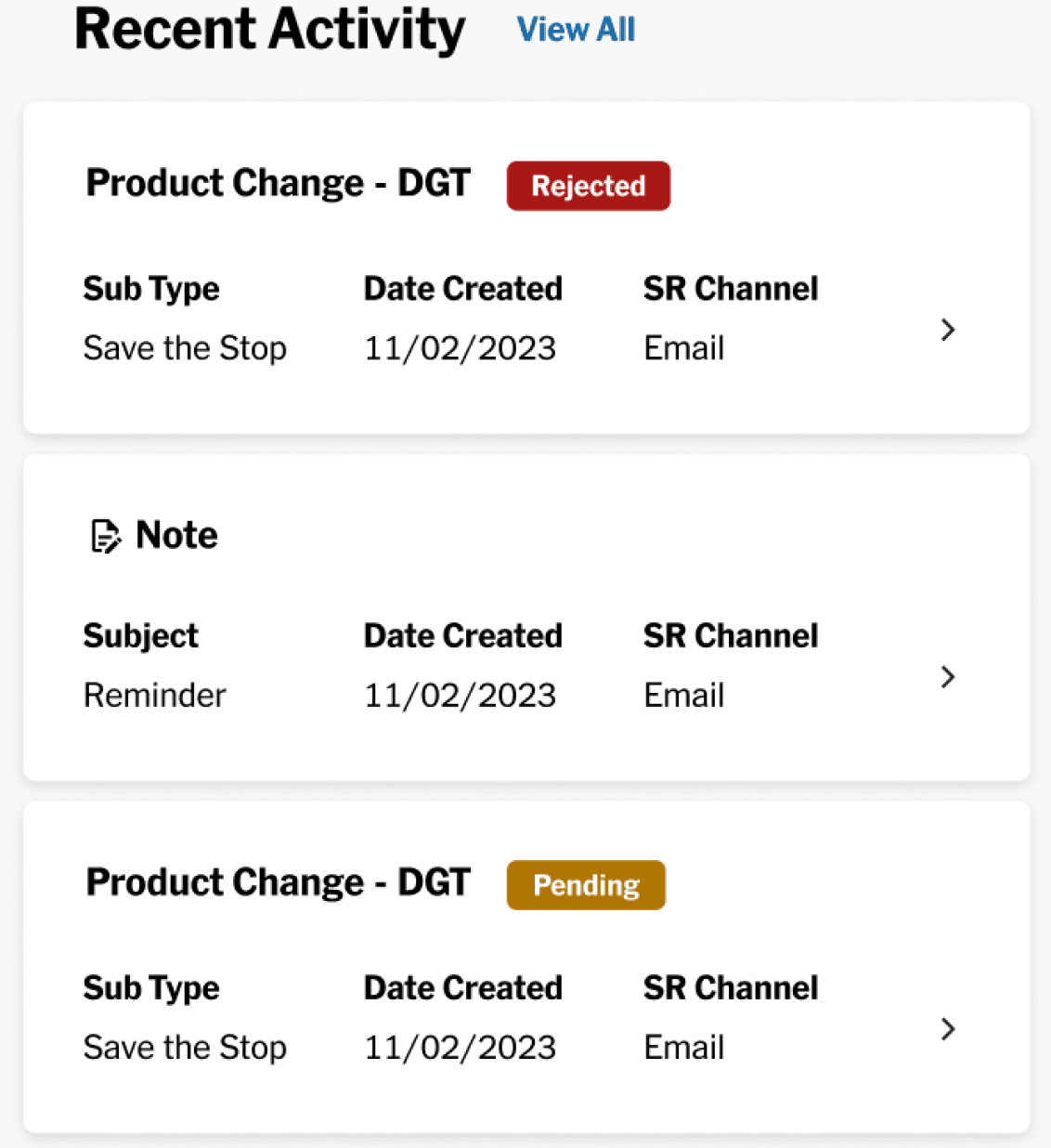
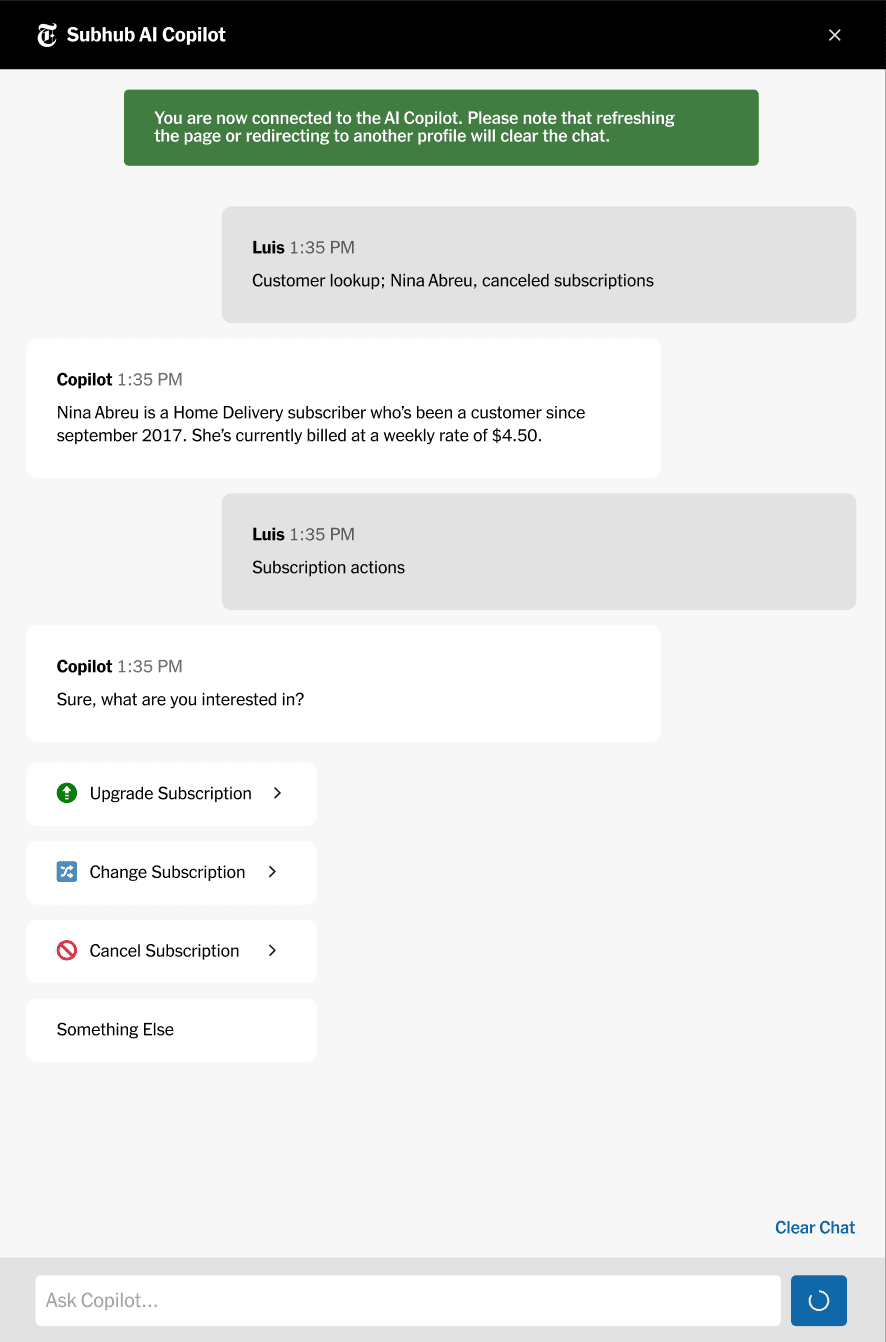
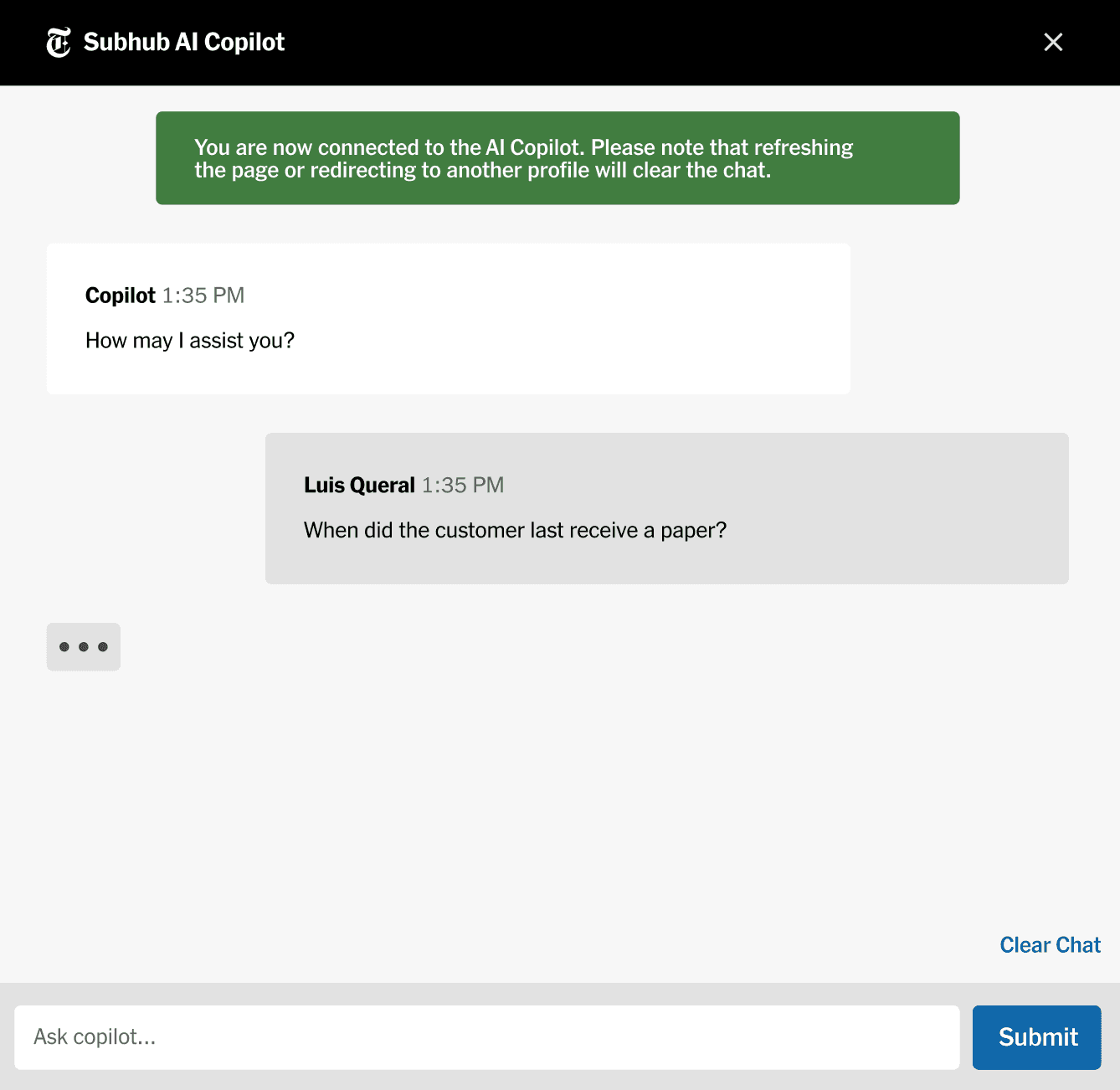
We launched Advanced Search, multiple attributes, greater flexibility, and laid the groundwork for an AI-powered tool that shipped three months later.

Standardized terminology across Account (customer-facing) and SubHub (agent platform), same feature, same name.
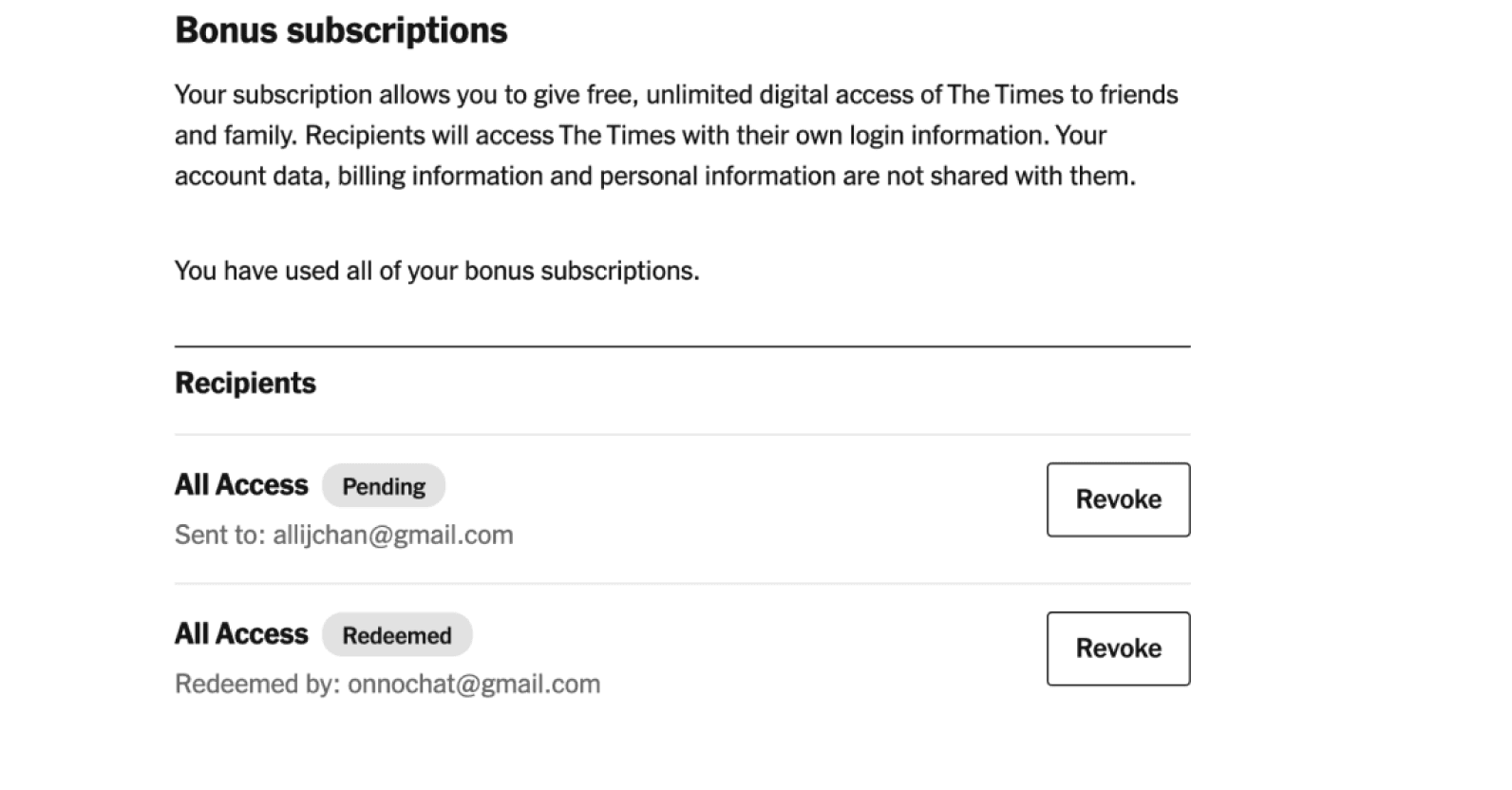
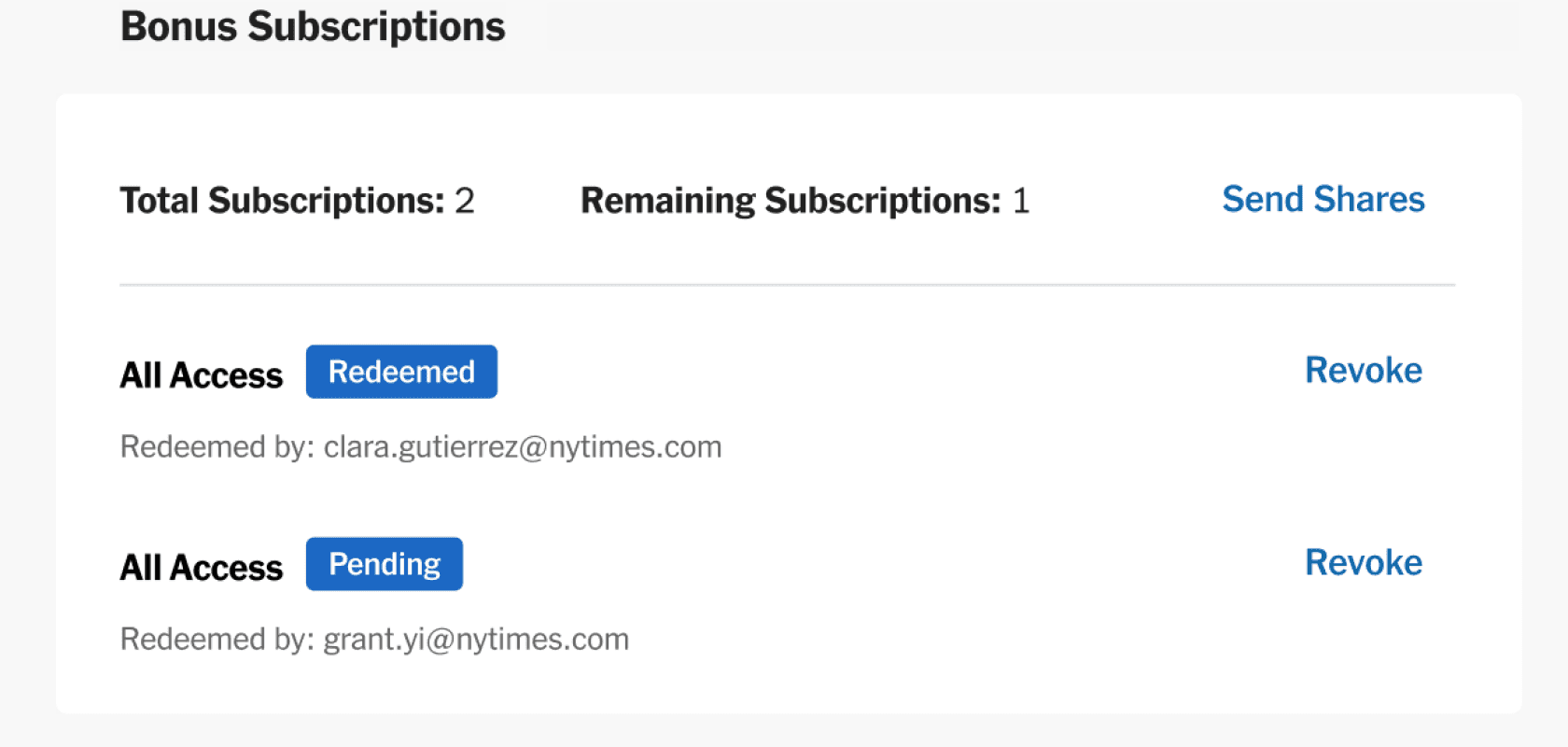
One of the biggest challenges was convincing the product team to implement the suggested changes. Research and agent feedback strongly supported a more streamlined structure, but some of the proposed updates, consolidating pages, introducing a centralized organization system, and enhancing search, required significant engineering effort.
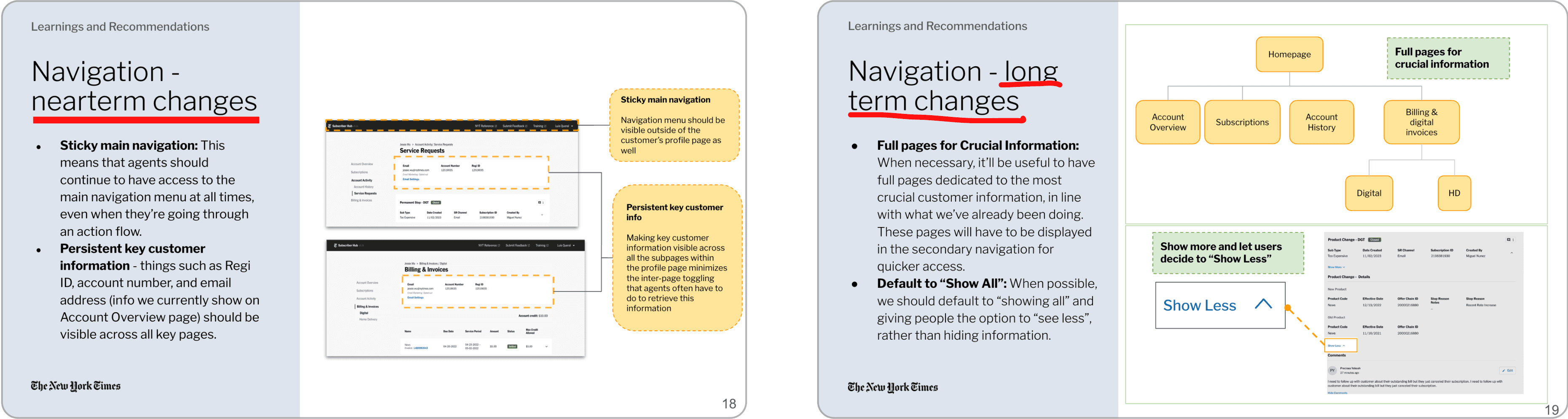
To drive alignment, I broke the work into near-term and long-term solutions, framing the changes in smaller, more manageable chunks. This helped the team focus on low-effort, high-impact improvements that could immediately enhance the agent experience while keeping larger structural changes on the roadmap.
Since implementing consistent labeling, persistent customer information, and a more robust search experience, we've seen measurable improvements.
Customer queue times, agents could retrieve information more efficiently, leading to faster resolutions and shorter wait times.
Average handle time, agents spent less time toggling between pages and more time addressing customer needs.
A more robust search infrastructure laid the foundation for an AI-powered tool that shipped three months later, further improving how agents access customer insights.
The work shaped a more scalable, efficient, and effective support system, but the deeper outcome was a documented IA framework the rest of the product team now uses when adding new surfaces. The structure isn't done; it's maintainable, which is the actual win.
The biggest miss was waiting until the workshop phase to bring engineering leads into the IA proposal directly. They had the strongest intuition about which renames would carry implementation cost and which were free, earlier input would have saved a round of revisions. The biggest lesson: holding the line on three top-level modes when stakeholders pushed for four, then five. Research kept three honest. Tree-test data kept it shippable.